
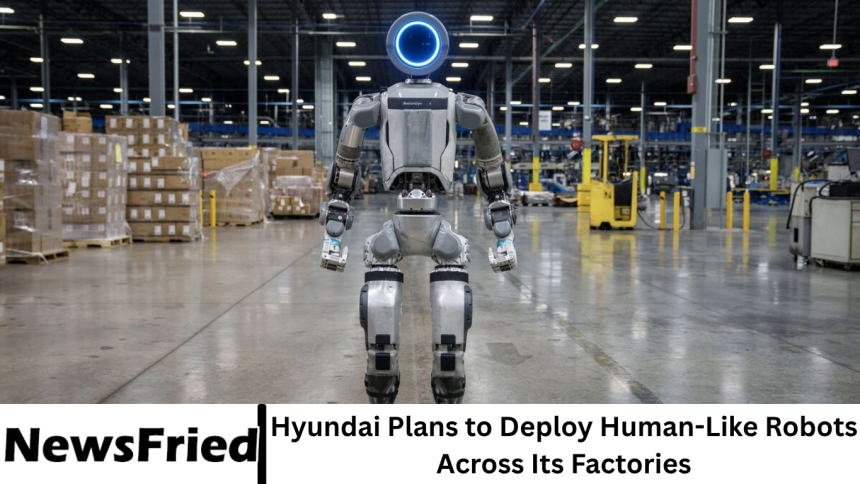
The global manufacturing industry is on the brink of a revolutionary transformation, and at the center of this shift is Hyundai Motor Company. Known for innovation and forward-thinking strategies, Hyundai is now taking a bold step into the future by planning to deploy human-like robots across its factories.
This move isn’t just about automation—it represents a deeper evolution toward intelligent manufacturing ecosystems where machines and humans collaborate seamlessly. As industries worldwide race to embrace robotics, Hyundai’s initiative signals a new era of production efficiency, workplace safety, and technological advancement.
The Vision Behind Hyundai’s Robotic Transformation
A Strategic Shift Toward Smart Manufacturing
Hyundai’s decision to integrate human-like robots into its factories is part of a broader shift toward smart manufacturing. The company has long invested in automation, but this new phase goes beyond traditional robotic arms and conveyor systems.
Unlike conventional machines, human-like robots are designed to mimic human movements, adapt to dynamic environments, and perform complex tasks with precision. This allows Hyundai to create more flexible and responsive production lines.
Role of Boston Dynamics
A key driver behind this innovation is Hyundai’s acquisition of Boston Dynamics, a leader in advanced robotics. Known for developing cutting-edge robots like Atlas and Spot, Boston Dynamics brings expertise in mobility, AI, and machine learning.
By leveraging this partnership, Hyundai aims to bring highly capable humanoid robots into real-world industrial applications, bridging the gap between experimental robotics and practical deployment.
What Are Human-Like Robots?
Understanding Humanoid Robotics
Human-like robots, often referred to as humanoid robots, are machines designed to resemble the human body in structure and movement. These robots typically feature:
- Arms and hands for manipulation
- Legs or wheels for mobility
- Sensors and cameras for perception
- AI systems for decision-making
Unlike traditional factory robots that are fixed in place, humanoid robots can move freely, making them ideal for complex manufacturing environments.
How They Differ from Traditional Automation
Traditional automation systems are highly efficient but limited in flexibility. They are programmed for specific tasks and often require reconfiguration for new processes.
Human-like robots, on the other hand, can adapt to different tasks with minimal changes. They can navigate factory floors, interact with tools, and even collaborate with human workers—making them far more versatile.
Why Hyundai Plans to Deploy Human-Like Robots Across Its Factories
Enhancing Productivity and Efficiency
One of the main reasons Hyundai is embracing humanoid robots is to boost productivity. These robots can work continuously without fatigue, reducing downtime and increasing output.
They can also handle repetitive tasks with consistent accuracy, minimizing errors and improving overall product quality.
Improving Workplace Safety
Manufacturing environments often involve hazardous conditions, including heavy machinery, high temperatures, and toxic materials. Human-like robots can take on dangerous tasks, reducing the risk of workplace injuries.
This shift not only protects workers but also helps companies comply with safety regulations and reduce liability.
Addressing Labor Shortages
Many countries are facing labor shortages in manufacturing sectors. By deploying robots, Hyundai can maintain production levels even when skilled workers are scarce.
Humanoid robots provide a scalable solution to workforce challenges, ensuring long-term operational stability.
The Technology Powering Hyundai’s Robots
Artificial Intelligence and Machine Learning
At the core of these robots is advanced AI. Machine learning algorithms enable robots to learn from data, improve performance over time, and adapt to new tasks.
This allows robots to make real-time decisions, recognize objects, and interact with their environment more effectively.
Computer Vision Systems
Computer vision enables robots to “see” and interpret visual data. Using cameras and sensors, robots can identify objects, detect defects, and navigate complex spaces.
This technology is essential for tasks such as quality inspection and assembly.
Advanced Sensors and Mobility
Human-like robots are equipped with sensors that provide feedback on movement, pressure, and surroundings. This allows for precise control and safe interaction with humans.
Mobility systems, including legs or wheels, enable robots to move freely across factory floors, making them more adaptable than stationary machines.
Applications in Hyundai’s Factories
Assembly Line Operations
Humanoid robots can assist in assembling vehicles, handling components, and performing intricate tasks that require dexterity.
They can work alongside human employees, creating a collaborative production environment.
Quality Control and Inspection
Robots equipped with vision systems can inspect products for defects with high accuracy. This improves quality assurance and reduces the likelihood of faulty products reaching customers.
Logistics and Material Handling
Transporting materials within factories is another area where robots excel. They can move parts between stations, manage inventory, and streamline logistics operations.
Benefits of Deploying Human-Like Robots
Key Advantages for Hyundai
- Increased efficiency and reduced production time
- Enhanced product quality through precision
- Improved worker safety
- Greater flexibility in manufacturing processes
These benefits position Hyundai as a leader in next-generation manufacturing.
Long-Term Cost Savings
While the initial investment in robotics is significant, the long-term savings are substantial. Reduced labor costs, fewer errors, and increased efficiency contribute to a strong return on investment.
Challenges and Concerns
High Implementation Costs
Deploying advanced robots requires significant capital investment. This includes not only the robots themselves but also infrastructure upgrades and training.
Workforce Displacement
One of the biggest concerns is the impact on jobs. As robots take over certain tasks, there is a risk of workforce displacement.
However, many experts believe this shift will create new opportunities in robotics maintenance, programming, and supervision.
Technical Limitations
Despite advancements, humanoid robots are not yet perfect. They may struggle with highly complex or unpredictable tasks, requiring ongoing development and refinement.
The Future of Robotics in Manufacturing
A Collaborative Workforce
The future of manufacturing is not about replacing humans but enhancing their capabilities. Robots will handle repetitive and dangerous tasks, while humans focus on creativity, problem-solving, and decision-making.
Industry-Wide Adoption
Hyundai’s move is likely to inspire other manufacturers to adopt similar technologies. Companies like Tesla and Toyota are also exploring humanoid robotics.
This trend suggests a widespread shift toward intelligent automation across industries.
Global Impact of Hyundai’s Initiative
Setting New Industry Standards
By deploying human-like robots, Hyundai is setting a benchmark for innovation in manufacturing. This could redefine industry standards and accelerate the adoption of robotics worldwide.
Economic and Technological Growth
The integration of robotics is expected to drive economic growth, create new job opportunities, and foster technological advancements.
Countries that embrace this transformation will likely gain a competitive edge in the global market.
Frequently Asked Question
What are human-like robots?
Human-like robots are machines designed to mimic human movements and perform tasks using AI, sensors, and advanced mobility systems.
Why is Hyundai using humanoid robots?
Hyundai aims to improve efficiency, safety, and flexibility in its manufacturing processes.
Will robots replace human workers?
Robots may replace some tasks, but they will also create new roles and opportunities in technology and management.
What company supports Hyundai’s robotics efforts?
Hyundai collaborates with Boston Dynamics, a leader in advanced robotics technology.
Are humanoid robots already in use?
Yes, they are being tested and gradually introduced in industrial and research environments.
What industries can benefit from humanoid robots?
Manufacturing, logistics, healthcare, and construction are among the key sectors.
What is the future of robotics in factories?
Factories will become more automated, with robots and humans working together efficiently.
Conclusion
Hyundai’s plan to deploy human-like robots across its factories marks a significant milestone in the evolution of manufacturing. By combining advanced robotics with intelligent systems, the company is paving the way for a smarter, safer, and more efficient industrial landscape.