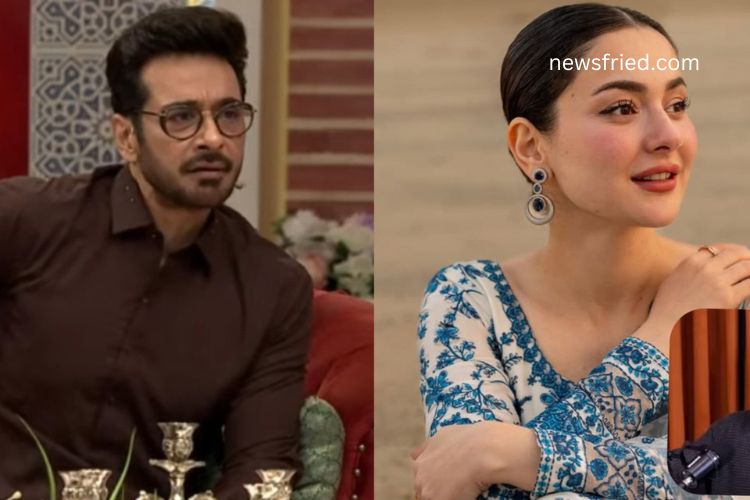
Pakistani actor Faysal Quraishi has stepped into an ongoing public debate surrounding Hania Aamir’s reported Rs2 million fee for appearing on a podcast, strongly defending her right to set her own professional rates. The discussion has gained widespread attention across social media platforms, sparking conversations about celebrity earnings, market value, and fairness within Pakistan’s entertainment industry.
The controversy began when reports emerged suggesting that Hania Aamir, one of Pakistan’s most recognized television and film stars, charged a significant fee for a podcast appearance. The figure quickly went viral, triggering intense reactions online. While some users criticized the amount as excessive, others argued that celebrities have every right to determine their own compensation based on demand, popularity, and industry standards.
As the debate escalated, Faysal Quraishi publicly addressed the issue, supporting Hania Aamir and challenging the criticism directed toward her reported earnings. His remarks added a new dimension to the conversation, shifting attention from the fee itself to broader questions about creative labor, market dynamics, and personal autonomy in pricing.
Read More: My Top 3 Undervalued Stock Market Gems That Could Deliver Massive Gains
Controversy Surrounding Hania Aamir’s Podcast Fee
The discussion around Hania Aamir’s alleged Rs2 million podcast fee quickly became a trending topic on social media. Users expressed divided opinions, with some questioning whether podcast appearances justify such high payments, while others emphasized that public figures often earn based on brand value rather than time spent alone.
Critics argued that such high fees reflect a widening gap between celebrity earnings and average income levels in Pakistan. Many also questioned whether digital content platforms should allocate such budgets for guest appearances, especially in a market still developing its monetization structures.
On the other hand, supporters of Hania Aamir pointed out that podcasting has evolved into a powerful media industry, where influential guests can significantly boost viewership, sponsorships, and revenue. From this perspective, high appearance fees reflect the commercial value that top-tier celebrities bring to digital platforms.
The debate highlighted how rapidly the podcast and digital content ecosystem is expanding in Pakistan, where creators are increasingly competing for high-profile guests to drive engagement and growth.
Faysal Quraishi’s Strong Defense of Professional Freedom
Faysal Quraishi responded directly to the criticism surrounding the reported fee, emphasizing that artists and public figures have the right to set their own financial terms. He stated that if a creator or celebrity demands a certain amount and a client is willing to pay it, then the transaction is justified within a free-market system.
His statement reflected a broader principle of professional autonomy. According to Quraishi, the entertainment industry operates on demand and supply, and pricing is ultimately determined by the value perceived by both parties involved. He questioned the logic of public backlash against private agreements, suggesting that such decisions should remain between the talent and the paying platform.
Quraishi’s remarks resonated with many users who believe that creative professionals, especially those with significant influence and audience reach, should not be restricted or judged for setting high fees.
Social Media Reaction and Public Divide
The actor’s comments sparked further discussion online, with social media users split into opposing camps. Supporters of his viewpoint praised him for defending industry professionalism and encouraging fair compensation for talent. They argued that celebrities invest years into building their brand, and their fees reflect both experience and market demand.
Conversely, critics maintained that such high figures appear disconnected from the economic reality of the general public. They argued that while free-market principles apply, public figures also carry a social responsibility due to their influence on younger audiences and aspiring artists.
The discussion also expanded into broader concerns about transparency in celebrity earnings. Some users called for clearer standards or industry benchmarks to ensure consistency and fairness in how fees are structured across media appearances, endorsements, and digital collaborations.
Growth of Podcast Culture in Pakistan
The controversy has also shed light on the rapid rise of podcast culture in Pakistan. Over the past few years, podcasts have transformed from niche content into mainstream digital platforms featuring celebrities, journalists, and influencers.
As competition grows among podcast creators, securing high-profile guests has become a key strategy for increasing audience engagement. Popular actors, athletes, and public figures are now frequently invited to share personal stories, industry insights, and public opinions, often driving viral moments and widespread media coverage.
With monetization opportunities increasing through sponsorships, advertising, and platform partnerships, podcasts have evolved into a significant revenue-generating industry. As a result, appearance fees for well-known personalities have also risen, reflecting their impact on viewership and digital traction.
Within this evolving ecosystem, high-profile celebrities are increasingly seen as premium contributors whose presence can directly influence a show’s success.
Debate Over Double Standards in Celebrity Earnings
A significant portion of the online discussion has focused on perceived double standards in how celebrity earnings are judged. Several users highlighted that male celebrities in the entertainment industry often receive less public criticism for high earnings compared to their female counterparts.
Supporters of this argument claim that women in the entertainment industry face disproportionate scrutiny regarding their professional decisions, including fees, endorsements, and brand collaborations. They argue that this imbalance reflects broader societal biases that persist in media discussions and public opinion.
Others, however, argue that the issue is not gender-based but rather rooted in economic concerns and the visibility of celebrity lifestyles. According to this perspective, public reactions are driven more by perceived inequality in income levels than by gender bias.
Despite differing opinions, the debate has encouraged a broader reflection on fairness, equality, and representation within Pakistan’s entertainment industry.
Economic Perspective on Celebrity Fees
From an economic standpoint, celebrity fees are often determined by supply and demand dynamics. High-profile personalities with large followings, strong media presence, and consistent public interest are able to command higher rates due to their ability to attract audiences and generate revenue.
In digital media, particularly podcasts, engagement metrics such as views, shares, and watch time directly influence monetization potential. A celebrity like Hania Aamir brings not only star power but also increased visibility, which can significantly enhance a podcast’s commercial performance.
This market-driven approach explains why appearance fees can vary widely across different tiers of public figures. Established stars often command premium rates, while emerging talent may appear for lower or even promotional fees depending on exposure opportunities.
Within this framework, Faysal Quraishi’s argument aligns with standard industry economics, where pricing is determined by mutual agreement between talent and platform rather than external approval.
Continuing Public Conversation
The discussion surrounding Hania Aamir’s reported podcast fee shows no signs of slowing down. As digital media continues to grow in Pakistan, conversations about compensation, fairness, and industry standards are likely to become even more prominent.
Public opinion remains divided, with some advocating for unrestricted market freedom and others calling for more balanced expectations in celebrity earnings. The debate reflects a broader cultural shift as audiences become more engaged in understanding how digital entertainment economies function.
Faysal Quraishi’s comments have added weight to the argument in favor of professional autonomy, reinforcing the idea that creative work should be valued according to market demand rather than public assumption.
Frequently Asked Questions:
What did Faysal Quraishi say about Hania Aamir’s Rs2 million podcast fee?
Faysal Quraishi defended Hania Aamir, stating that if she is charging Rs2 million and someone is willing to pay it, then it is her right as a professional.
Why is Hania Aamir’s podcast fee being discussed online?
The debate started after reports claimed that Hania Aamir charged Rs2 million for a podcast appearance, which sparked mixed reactions on social media.
Did Faysal Quraishi criticize or support Hania Aamir?
Faysal Quraishi supported Hania Aamir, emphasizing that artists have the freedom to set their own fees based on demand and market value.
What was the public reaction to Faysal Quraishi’s statement?
Social media users were divided—some praised his stance on professional freedom, while others questioned high celebrity fees in Pakistan’s entertainment industry.
Is there any official statement from Hania Aamir?
No, Hania Aamir has not publicly commented on the reports regarding her podcast fee or the online debate.
Why are celebrity podcast fees controversial?
Many people feel high fees are excessive, while others believe celebrities should earn according to their popularity, audience reach, and market demand.
What broader issue does this controversy highlight?
The discussion highlights debates about fairness, double standards, and income disparity within Pakistan’s entertainment industry.
Conclusion
The ongoing discussion surrounding Hania Aamir’s reported Rs2 million podcast fee has evolved into a wider debate about celebrity earnings, market value, and professional freedom in Pakistan’s entertainment industry. Faysal Quraishi’s strong support for Hania Aamir has intensified the conversation, emphasizing that artists have the right to set their own prices based on demand and mutual agreement. While some view the fee as excessive, others see it as a reflection of modern digital media economics, where influence and audience reach directly impact value.