
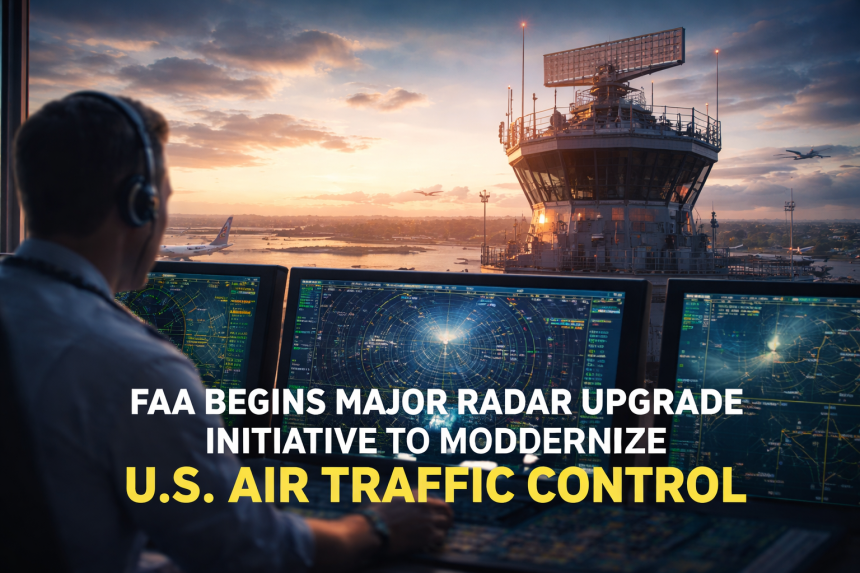
The aviation industry is undergoing a transformative shift, and at the center of this evolution is the ambitious initiative by the Federal Aviation Administration (FAA) to modernize the United States air traffic control (ATC) system.
With increasing air travel demand, aging infrastructure, and the growing complexity of managing both traditional aircraft and emerging technologies like drones, modernization is no longer optional—it is essential.
The announcement titled “FAA Begins Major Radar Upgrade Initiative to Modernize U.S. Air Traffic Control” marks a critical milestone in aviation history. This initiative represents the first major step in overhauling radar systems that have served for decades but are now struggling to keep up with modern demands.
Understanding the Current U.S. Air Traffic Control System
How Air Traffic Control Works
Air traffic control is the backbone of aviation safety. It ensures that thousands of aircraft move safely and efficiently through the skies every day. Controllers rely on radar systems, communication tools, and satellite-based navigation to monitor aircraft positions and guide pilots.
Limitations of Existing Radar Systems
Many radar systems currently in use were designed decades ago. While they have been reliable, they present several limitations:
- Limited accuracy compared to modern technologies
- High maintenance costs
- Inability to efficiently handle increased traffic
- Reduced compatibility with emerging aviation technologies
These challenges highlight the urgent need for modernization.
Why the FAA Begins Major Radar Upgrade Initiative to Modernize U.S. Air Traffic Control
Rising Air Traffic Demand
Air travel in the United States continues to grow steadily. Major airlines like Delta Air Lines and American Airlines operate thousands of daily flights, placing immense pressure on existing infrastructure.
Aging Infrastructure
Many radar installations are approaching or exceeding their intended lifespan. Without upgrades, the risk of system failures increases, potentially affecting safety and efficiency.
Integration with NextGen
The FAA’s broader modernization effort, known as NextGen, aims to transition from radar-based systems to satellite-based navigation. The radar upgrade initiative complements this transition by ensuring a hybrid system that improves reliability.
Key Features of the Radar Upgrade Initiative
1. Advanced Surveillance Technology
The new radar systems will incorporate cutting-edge technology that offers:
- Enhanced detection accuracy
- Faster data processing
- Improved tracking capabilities
2. Increased System Reliability
Modern radar equipment is designed with redundancy and resilience, reducing the likelihood of outages and disruptions.
3. Improved Coverage
Upgraded radar systems will provide better coverage in remote and previously underserved areas, improving safety nationwide.
4. Integration with Digital Systems
The new systems will seamlessly integrate with digital platforms, allowing for real-time data sharing and improved coordination.
How Radar Upgrades Will Transform Air Traffic Management
Enhanced Safety
Safety is the FAA’s top priority. With improved radar accuracy and reliability, controllers will have a clearer picture of aircraft positions, reducing the risk of mid-air collisions.
Greater Efficiency
Modern radar systems allow for more precise routing, reducing delays and fuel consumption. This benefits airlines and passengers alike.
Reduced Congestion
By improving tracking and communication, the FAA can manage air traffic more effectively, especially in busy airspace regions.
The Role of NextGen in Modernization
What is NextGen?
NextGen is a comprehensive initiative led by the FAA to modernize the U.S. aviation system using satellite-based technology.
Radar vs. Satellite-Based Systems
While satellite systems offer significant advantages, radar remains a critical backup. The FAA’s approach ensures:
- Redundancy for safety
- Seamless integration between systems
- Gradual transition to newer technologies
Economic Impact of the Initiative
Boost to the Aviation Industry
Modernization will improve operational efficiency, helping airlines save billions in fuel and operational costs.
Job Creation
The initiative is expected to create jobs in:
- Engineering
- Construction
- Technology development
- System maintenance
Global Competitiveness
Upgrading air traffic control systems ensures that the U.S. remains a global leader in aviation.
Environmental Benefits
Reduced Carbon Emissions
More efficient flight paths mean less fuel consumption, which directly reduces greenhouse gas emissions.
Optimized Flight Routes
Aircraft can avoid unnecessary detours, leading to shorter travel times and lower environmental impact.
Challenges Facing the FAA Radar Upgrade Initiative
Funding Constraints
Large-scale infrastructure projects require significant investment. Securing consistent funding can be a challenge.
Implementation Complexity
Upgrading systems across the entire country involves:
- Coordinating multiple stakeholders
- Minimizing disruption to ongoing operations
- Ensuring compatibility with existing systems
Cybersecurity Concerns
As systems become more digital, protecting them from cyber threats becomes increasingly important.
Impact on Airlines and Passengers
For Airlines
Airlines such as Southwest Airlines will benefit from:
- Reduced delays
- Lower operational costs
- Improved scheduling
For Passengers
Passengers can expect:
- Shorter flight times
- Fewer delays
- Enhanced safety
Technological Innovations Behind the Upgrade
Digital Radar Systems
Unlike traditional analog systems, digital radar offers:
- Higher precision
- Better data integration
- Faster updates
Automation and AI
Artificial intelligence will assist air traffic controllers by:
- Predicting potential conflicts
- Optimizing flight paths
- Reducing workload
Comparison with Global Air Traffic Systems
Countries around the world are also modernizing their air traffic systems. The FAA’s initiative ensures that the U.S. remains competitive with regions like:
- Europe’s SESAR program
- Asia’s rapidly evolving aviation networks
Timeline and Implementation Phases
Planning and Testing
Initial testing of new radar systems in selected locations.
Deployment
Gradual rollout across major airports and control centers.
Nationwide Integration
Full integration with existing systems and NextGen technologies.
Frequently Asked Question
What is the FAA radar upgrade initiative?
It is a modernization effort by the FAA to replace outdated radar systems with advanced technology for improved safety and efficiency.
Why is modernization of air traffic control necessary?
Because existing systems are aging and cannot efficiently handle increasing air traffic and new technologies.
How will this initiative affect passengers?
Passengers will experience fewer delays, shorter travel times, and improved safety.
What technologies are being introduced?
Advanced digital radar, AI-based tools, and integration with satellite systems.
Will radar be replaced by satellites completely?
No, radar will remain as a backup to ensure safety and reliability.
How long will the upgrade take?
The initiative will be implemented in phases over several years.
What are the environmental benefits?
Improved efficiency will reduce fuel consumption and lower carbon emissions.
Conclusion
The FAA’s radar upgrade initiative represents a pivotal step in transforming the U.S. aviation landscape. By investing in advanced technology, improving efficiency, and enhancing safety, the FAA is laying the groundwork for the future of air travel. As the initiative progresses, it will not only benefit airlines and passengers but also strengthen the United States’ position as a global aviation leader. While challenges remain, the long-term benefits far outweigh the hurdles, making this modernization effort one of the most significant developments in aviation history.