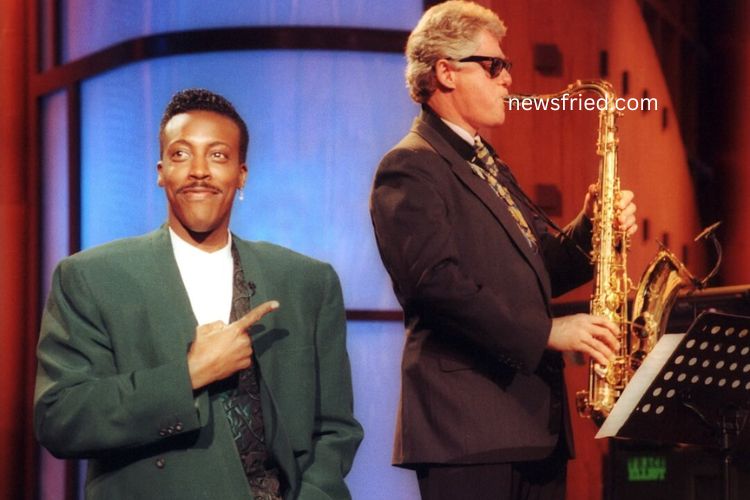
In June 1992, a political moment unfolded that would forever reshape the intersection of politics and pop culture. Bill Clinton, then governor of Arkansas and a presidential candidate, appeared on The Arsenio Hall Show. Dressed in a suit and sunglasses, he pressed his lips to a saxophone and played Elvis Presley’s “Heartbreak Hotel.” The audience erupted, cheering and standing, while Arsenio Hall laughed and clapped alongside them. After finishing, Clinton high-fived a band member, signaling the seamless blending of politics and entertainment.
This brief, musical performance became more than a late-night stunt. It symbolized a turning point in political communication, demonstrating a new path for candidates to connect with voters beyond traditional media. By skipping conventional news outlets and stepping onto a popular talk show, Clinton tapped directly into the youth vote and mainstream culture. His gamble illustrated a profound understanding of media influence, turning what some called an unpresidential moment into political legend.
A Calculated Risk
Critics questioned whether playing the saxophone was presidential. CNN’s John King later reflected that Clinton took a significant risk by appearing outside traditional media channels. “Good politicians take a risk,” King said, noting that Clinton’s choice paid off.
Years later, Arsenio Hall recounted a personal anecdote highlighting the impact of that night. Clinton invited him to a soccer game and acknowledged the show’s role in his election: “‘You know I’m president because of you, right?’” Hall recalled Clinton saying in his Southern drawl. “‘Without you, I don’t win that election.’”
For many observers, the saxophone moment was a blend of calculated strategy and genuine authenticity. Phil Edwards, a political commentator and video producer, revisited the performance for his YouTube channel. Initially skeptical, Edwards admitted that while the appearance served to appeal to young voters, it also reflected Clinton’s real enjoyment of the instrument. He argued that it foreshadowed the trend of candidates revealing authentic sides of themselves—a tactic widely employed in today’s campaigns.
The Legacy of Pop Culture in Politics
Edwards sees the influence of Clinton’s Arsenio appearance in contemporary political campaigns. In the 2024 election cycle, candidates like Kamala Harris and Donald Trump engaged audiences through podcasts and culturally relevant media outside traditional news platforms. By expanding their media reach, these politicians echo Clinton’s approach from the 1990s: breaking the boundaries of what a candidate can do and where they can appear.
Clinton’s saxophone performance was not an isolated phenomenon but part of a long history of presidents leveraging popular culture to engage the public. Kristin Shockley, a senior instructor at Florida Atlantic University, points to early examples such as Warren G. Harding receiving celebrity endorsements from Al Jolson, and Franklin D. Roosevelt’s radio Fireside Chats, which bypassed Congress to speak directly to Americans.
Television further transformed political communication. The 1960 debate between John F. Kennedy and Richard Nixon illustrated how media presence could influence public perception. Kennedy’s confident, telegenic performance contrasted with Nixon’s nervous appearance, demonstrating that image and presentation had become crucial to electoral success.
Authenticity Versus Performance
The intersection of pop culture and politics invites a complex debate about authenticity. While Clinton’s sax moment offered a glimpse of his personality, it was not a policy discussion. Edwards emphasizes that modern appearances on entertainment platforms often reveal a candidate’s character but may sacrifice substantive dialogue. “You get a sense of the authentic person, of what it would be like to hang out with them, but you don’t necessarily get a sense of what it would be like to be governed by them,” Edwards observed.
Shockley also questions whether such moments are genuine outreach or calculated manipulation. Are politicians connecting with voters, or simply crafting an image to appeal to popular tastes? The line between authenticity and performance remains blurred, and moments like Clinton’s performance continue to spark debate about the evolving role of media in politics.
Cultural Resonance
Clinton’s saxophone performance resonated far beyond the campaign trail. It entered popular culture, referenced in shows like Animaniacs, and became a defining image of 1990s political media strategy. Queen Latifah, reflecting on the moment during an interview with Clinton, recalled thinking, “I’m voting for that guy. I gotta vote for that guy.” Clinton himself described the appearance as an attempt to break through cynicism and show voters that he could relate to them. “I wanted the voters to think — whether they voted for me or not — that it was possible to be like them, to be tuned into them, to care about them. And so I just took a flying leap and tried it. And I liked it.”
The performance highlighted a shift in political messaging. Candidates increasingly use entertainment media to establish relatability, humanize themselves, and reach younger or disengaged voters. The blending of pop culture and politics is now an expected aspect of modern campaigning, from late-night appearances to viral social media content.
Enduring Lessons
Bill Clinton’s saxophone moment reminds us that political communication is not only about policy positions but also about connection and presentation. By embracing pop culture, Clinton demonstrated a willingness to take risks, show authenticity, and engage directly with the public. His performance also underscores the media’s evolving role in shaping political narratives and influencing voter perceptions.
As political campaigns continue to adapt to new technologies and media landscapes, the principles evident in Clinton’s Arsenio Hall appearance remain relevant. Successful candidates balance substance with relatability, messaging with personality, and strategy with authenticity. The saxophone may have been a simple instrument, but the performance struck a chord that still resonates in American politics today.
Frequently Asked Questions:
What happened when Bill Clinton appeared on The Arsenio Hall Show?
In June 1992, Bill Clinton, then governor of Arkansas, played the saxophone on The Arsenio Hall Show, performing Elvis Presley’s “Heartbreak Hotel.” The performance thrilled the audience and marked a pivotal moment where politics and pop culture intersected.
Why was Clinton playing the saxophone significant?
The performance demonstrated Clinton’s willingness to connect with voters in a non-traditional, relatable way. It bypassed standard political media, aimed to engage younger voters, and showed a more human, authentic side of the candidate.
How did the public react to the saxophone moment?
The audience cheered and stood, while Arsenio Hall laughed and clapped along. Many viewers found the performance memorable and relatable, contributing to Clinton’s image as a charismatic and approachable candidate.
Did playing the saxophone affect Clinton’s campaign?
Yes. The appearance became a cultural phenomenon, helping Clinton reach a younger demographic and reshape political campaigning. It also set a precedent for future candidates using pop culture platforms to engage voters directly.
Was the moment purely strategic or authentic?
Opinions vary. Some analysts argue it was a calculated move to attract the youth vote, while others note that Clinton genuinely enjoyed playing the saxophone. The moment combined both strategy and authenticity.
How did this moment influence modern political campaigns?
Clinton’s appearance paved the way for candidates to engage audiences outside traditional journalism. Today, politicians often appear on podcasts, social media, and entertainment shows to reach voters directly, similar to Clinton’s approach in 1992.
Are there historical precedents for blending politics and entertainment?
Yes. Presidents like Warren G. Harding received celebrity endorsements, and Franklin D. Roosevelt used radio Fireside Chats to connect directly with the public. The Kennedy-Nixon televised debate in 1960 also highlighted the power of media in shaping voter perception.
Conclusion
Bill Clinton’s saxophone performance on The Arsenio Hall Show was more than a playful late-night stunt—it was a defining moment where politics met pop culture. By stepping outside traditional media and showing a relatable, authentic side, Clinton reshaped how candidates connect with voters. The performance demonstrated the power of risk-taking, personality, and cultural awareness in political communication. Decades later, its impact is still felt in modern campaigns, where politicians increasingly use entertainment, social media, and unconventional platforms to reach the public.