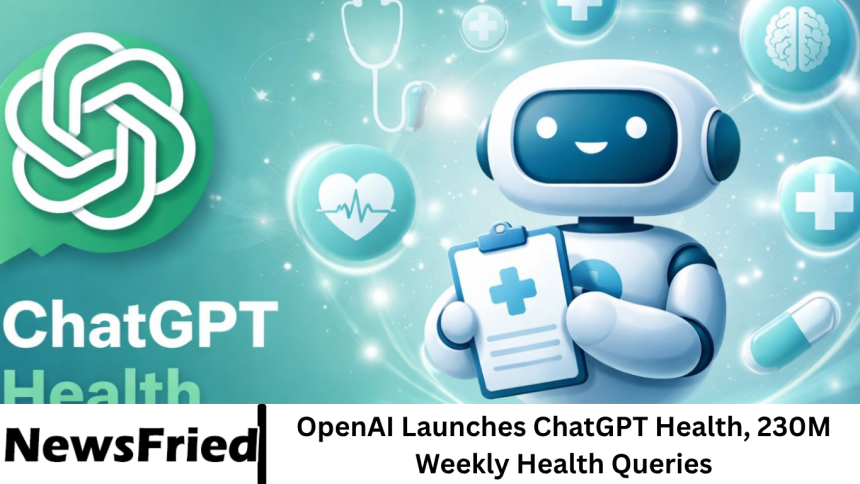
The intersection of artificial intelligence and healthcare has taken a significant leap forward with OpenAI unveiling its latest initiative—ChatGPT Health. According to the company, a staggering 230 million users turn to ChatGPT every week for health-related queries. This figure alone highlights a growing global reliance on AI for medical information, symptom checking, wellness advice, and healthcare guidance.
In an era where access to reliable health information can be inconsistent or delayed, ChatGPT Health aims to bridge the gap between patients and timely insights. While it does not replace professional medical advice, it represents a powerful tool in the evolving landscape of digital healthcare.
What Is ChatGPT Health?
ChatGPT Health is a specialized extension of ChatGPT designed to provide users with more accurate, contextual, and responsible health-related information. Unlike general-purpose AI interactions, this version focuses on refining responses in medical contexts, improving reliability, and aligning with healthcare standards.
OpenAI’s goal is not to position ChatGPT as a doctor but rather as a trusted informational assistant. The system is trained with enhanced safeguards, curated data, and improved reasoning to handle sensitive health queries responsibly.
This development reflects a broader trend in which AI is becoming a first point of contact for millions seeking quick answers about symptoms, medications, mental health, and lifestyle changes.
The Significance of 230 Million Weekly Health Queries
The revelation that 230 million users ask health-related questions weekly is more than just a statistic—it is a signal of changing behavior.
People are increasingly turning to AI tools before consulting healthcare professionals. This shift is driven by several factors:
- Accessibility: AI is available 24/7 without appointments
- Anonymity: Users can ask sensitive questions privately
- Speed: Instant responses reduce anxiety and waiting time
This surge in usage demonstrates a global demand for on-demand health knowledge, especially in regions where healthcare systems are overburdened or inaccessible.
It also raises important questions: Are users getting accurate information? Can AI reduce healthcare disparities? And how should it be regulated?
How ChatGPT Health Works
At its core, ChatGPT Health builds upon the existing architecture of ChatGPT but integrates additional layers of safety and refinement.
Enhanced Medical Context Understanding
The system is trained to better understand medical terminology, symptoms, and conditions. It can interpret user queries in context, whether someone is describing mild discomfort or a potentially serious issue.
Responsible Response Framework
ChatGPT Health is designed to:
- Avoid making definitive diagnoses
- Encourage users to seek professional medical help when needed
- Provide general guidance rather than prescriptive treatment
Continuous Learning and Updates
OpenAI continuously updates the system to improve accuracy, reduce misinformation, and align with evolving medical standards.
The Role of AI in Modern Healthcare
The launch of ChatGPT Health reflects a broader transformation in healthcare driven by artificial intelligence.
A Digital Front Door to Healthcare
For many users, AI tools like ChatGPT act as the first step in their healthcare journey. Before visiting a doctor, users often:
- Check symptoms
- Research possible conditions
- Explore treatment options
This “digital front door” reduces uncertainty and helps users make more informed decisions.
Supporting Healthcare Professionals
AI is not just for patients. Healthcare providers can also benefit from AI tools that assist with:
- Medical documentation
- Patient education
- Clinical decision support
By reducing administrative burdens, AI allows doctors to focus more on patient care.
Benefits of ChatGPT Health
ChatGPT Health introduces several advantages that could reshape how people access and understand healthcare information.
Improved Accessibility
One of the most significant benefits is accessibility. In many parts of the world, healthcare resources are limited. ChatGPT Health provides a free and instant source of information, making healthcare knowledge more democratic.
Faster Decision-Making
When users experience symptoms, time matters. ChatGPT Health can help them quickly understand whether a situation might require urgent attention or routine care.
Enhanced Health Literacy
By simplifying complex medical concepts, ChatGPT Health empowers users to better understand their health. This leads to more informed conversations with healthcare professionals.
Mental Health Support
Many users turn to AI for mental health guidance. ChatGPT Health can provide coping strategies, emotional support, and general advice, helping reduce stigma around seeking help.
Challenges and Limitations
Despite its promise, ChatGPT Health is not without challenges.
Risk of Misinterpretation
AI responses are based on patterns, not real-time diagnosis. Users may misinterpret information or rely too heavily on AI instead of consulting professionals.
Data Accuracy and Bias
The accuracy of AI depends on the data it is trained on. Ensuring that information is up-to-date and unbiased remains a critical challenge.
Ethical Concerns
Handling sensitive health information raises ethical questions about privacy, consent, and accountability.
OpenAI’s Approach to Safety
OpenAI has emphasized safety as a core component of ChatGPT Health.
Built-In Safeguards
The system is designed to:
- Avoid harmful or misleading advice
- Recognize high-risk scenarios
- Prompt users to seek professional care when necessary
Transparency
OpenAI aims to be transparent about the limitations of AI, clearly stating that ChatGPT Health is not a substitute for medical professionals.
Collaboration with Experts
To improve reliability, OpenAI is working with healthcare professionals and organizations to refine its approach.
The Global Impact of ChatGPT Health
The launch of ChatGPT Health could have far-reaching implications across the globe.
Bridging Healthcare Gaps
In developing regions, access to doctors can be limited. ChatGPT Health provides a valuable resource for basic health information.
Reducing Healthcare Costs
By helping users make informed decisions, AI tools may reduce unnecessary doctor visits and healthcare expenses.
Empowering Individuals
With better access to information, individuals can take greater control of their health and well-being.
The Future of AI in Healthcare
ChatGPT Health is just the beginning. The future of AI in healthcare holds immense potential.
Personalized Health Insights
Future AI systems may offer personalized recommendations based on individual health data, lifestyle, and medical history.
Integration with Wearables
AI could integrate with wearable devices to provide real-time health monitoring and alerts.
Advanced Diagnostics
While still evolving, AI may eventually assist in diagnosing diseases with greater accuracy and speed.
Balancing Innovation and Responsibility
As AI becomes more integrated into healthcare, maintaining a balance between innovation and responsibility is crucial. Regulators, healthcare providers, and technology companies must work together to ensure that AI tools are safe, ethical, and beneficial.
ChatGPT Health represents a step forward, but it also highlights the need for clear guidelines and oversight.
Frequently Asked Question
What is ChatGPT Health?
ChatGPT Health is an AI-powered feature designed to provide reliable health-related information and guidance.
Can ChatGPT Health replace doctors?
No, it is not a substitute for professional medical advice or diagnosis.
Why are 230 million users asking health questions weekly?
The convenience, speed, and accessibility of AI make it a popular first step for health inquiries.
Is ChatGPT Health accurate?
It aims to provide accurate information but may not always be perfect. Users should verify with professionals.
Is it safe to use for medical advice?
It is safe for general information but should not be relied on for critical medical decisions.
How does it protect user privacy?
OpenAI implements safeguards, but users should still be cautious when sharing sensitive information.
What makes ChatGPT Health different from regular ChatGPT?
It includes enhanced safety measures and improved handling of medical-related queries.
Conclusion
The launch of ChatGPT Health by OpenAI marks a significant milestone in the evolution of digital healthcare. With 230 million weekly health queries, it is clear that people are increasingly turning to AI for guidance, reassurance, and information. While the technology is not without its challenges, its potential to improve accessibility, enhance health literacy, and support healthcare systems is undeniable.