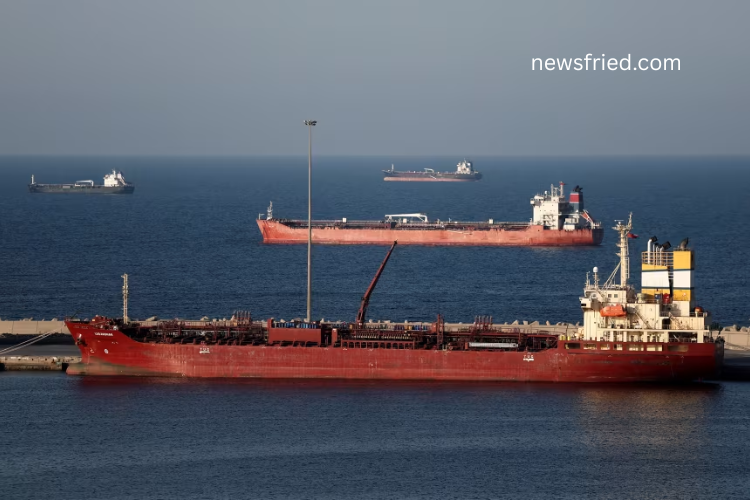
Iran has begun deploying mines in the Strait of Hormuz, one of the world’s most critical energy chokepoints. This narrow waterway handles roughly 20% of global crude oil exports, making any disruption a serious concern for international markets. While initial reports suggest the mining is limited, experts warn the situation could escalate quickly, posing significant risks to maritime navigation and energy stability.
Read More: Shocking Polls Reveal Americans Overwhelmingly Reject Trump’s Iran Strikes as Support Crashes
Limited Mining, But Potentially Dangerous
According to sources familiar with U.S. intelligence, only a few dozen mines have been deployed in recent days. However, Iran reportedly retains 80% to 90% of its small boats and mine-laying capacity, meaning it could deploy hundreds more mines rapidly. The Islamic Revolutionary Guard Corps (IRGC) now effectively controls the strait alongside Iran’s traditional navy, giving Tehran a strong tactical advantage in the region.
The IRGC can coordinate a “gauntlet” of mine-laying vessels, explosive-laden boats, and shore-based missile batteries, creating a highly volatile environment for shipping. Analysts warn that even a few strategically placed mines could shut down the strait temporarily, disrupting global oil flows and triggering market instability.
U.S. Response and Military Action
In reaction to the development, former President Donald Trump issued a statement on Truth Social demanding that any mines in the strait be removed immediately. He warned of consequences “at a level never before seen” if Iran failed to comply but offered that removing the mines would be a significant positive step.
Following Trump’s directive, Secretary of Defense Pete Hegseth announced on X that U.S. Central Command had destroyed inactive mine-laying vessels with “ruthless precision.” Later, Central Command confirmed that multiple Iranian naval ships, including 16 minelayers, were neutralized near the Strait of Hormuz. These strikes demonstrated the U.S. commitment to keeping the passageway open and preventing Iran from holding international shipping hostage.
The Strait as a Dangerous Zone
The IRGC previously warned that any vessel attempting to transit the strait would be attacked, effectively closing the channel since the start of regional hostilities. Sources describe the strait as a “death valley” due to the high risks posed by mines, missile batteries, and small craft. U.S. officials reported that no ships were escorted through the strait on Tuesday, although military options for safe passage are being evaluated.
Trump reiterated during a press conference that the U.S. Navy maintains a strong presence in the region. “The Strait of Hormuz is going to remain safe,” he said, highlighting advanced equipment and experienced personnel actively monitoring for mines.
Global Oil Supply at Risk
The current disruptions affect roughly 15 million barrels per day of crude production, along with 4.5 million barrels per day of refined fuels, leaving much of the Gulf’s output stranded. Major producers like Iraq and Kuwait rely almost entirely on the strait to export oil, and alternative routes are extremely limited.
The potential bottleneck has caused severe volatility in oil markets. On Tuesday, crude prices fluctuated between $80 and $90 per barrel, reflecting investor uncertainty about the strait’s safety. The G7 economies have signaled they may release additional oil supplies to stabilize markets if disruptions persist.
Strategic Implications and Regional Tensions
Iran’s mine-laying operation underscores its growing ability to control strategic maritime routes. By combining small boat swarms, mines, and shore-based missile defenses, the IRGC can threaten shipping while minimizing direct confrontation. For global powers, this situation presents a delicate balance: enforcing safe passage without escalating into open conflict.
The deployment also highlights the strategic importance of the Strait of Hormuz. Any extended closure or large-scale mining could trigger a global energy crisis, pushing oil prices higher and affecting economies worldwide. Analysts warn that even short-term disruptions can ripple across energy-dependent sectors, from transportation to manufacturing.
International Diplomatic Responses
While military action has been the immediate response, diplomatic channels remain critical. Western nations, including the U.S. and European partners, are closely monitoring Iran’s movements. Coordinated pressure through sanctions, negotiations, and maritime patrols aims to ensure the strait remains open. However, Iran’s warning of potential attacks on transiting ships complicates these efforts.
The international community also faces a strategic dilemma. Intervening militarily risks escalation, but allowing Iran to maintain mine-laying capabilities could threaten freedom of navigation and energy security. The balance between deterrence and diplomacy will shape the region’s stability in the coming weeks.
The Economic Fallout
Disruption in the Strait of Hormuz not only threatens oil exports but also impacts global trade and energy markets. Countries dependent on Gulf oil may face higher fuel costs, while investors react to market uncertainty with price swings and speculative trading.
Major producers are exploring options to bypass the strait, but alternatives like pipelines are limited and often at capacity. This leaves the global economy vulnerable to even minor interruptions in maritime shipping through the region.
Frequently Asked Questions:
What is happening in the Strait of Hormuz?
Reports indicate that Iran has begun deploying naval mines across the Strait of Hormuz, a vital maritime route responsible for about one‑fifth of the world’s crude oil exports. These actions are seen as a sharp escalation in regional tensions.
Why is the Strait of Hormuz so important?
The Strait of Hormuz is one of the world’s most strategic energy chokepoints. Nearly 20% of global oil supply passes through this narrow waterway, meaning any disruption can have major consequences for global energy markets.
How many mines have been laid, and how many could be deployed?
Initial reports suggest only a few dozen mines have been laid so far. However, Iran retains most of its fleet of small boats and mine‑laying capability, which means it could deploy hundreds more if it chooses to escalate.
Who is carrying out the mine‑laying?
Iran’s Islamic Revolutionary Guard Corps (IRGC), working alongside its navy, is believed to control the strait and oversee the mine‑laying operations.
What risk do naval mines pose to shipping?
Naval mines are designed to damage or sink vessels that strike them. Even a small number in a key shipping lane can force commercial ships to divert or stop, creating chaos in maritime trade and energy markets.
Has the U.S. responded militarily?
Yes. U.S. forces have reportedly destroyed multiple Iranian mine‑laying vessels in the region as a deterrent and to prevent further mine deployment.
Are the mines actually confirmed in the water?
Some U.S. officials have indicated mining activity based on intelligence sources, but there is debate and uncertainty over confirmed evidence of mines actually laid in the strait.
Conclusion
The reported mine-laying by Iran in the Strait of Hormuz represents a significant escalation with far-reaching consequences for global energy security, maritime trade, and regional stability. Even limited deployment poses severe risks to shipping, threatening nearly one-fifth of the world’s crude oil supply. While the U.S. has taken decisive military measures to counter the threat, the situation remains volatile, with economic, strategic, and diplomatic stakes running high. Vigilant monitoring, coordinated international response, and careful diplomacy are essential to ensure safe passage through this critical chokepoint and to prevent further disruption to the global energy market.