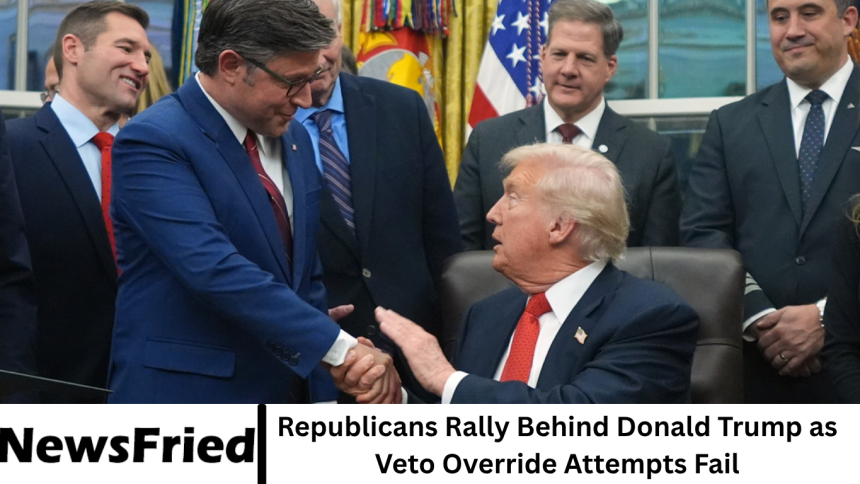
In a political landscape defined by deep divisions and strategic alliances, few moments capture the essence of party loyalty like a failed veto override. The recent development—where Republicans rallied behind Donald Trump as attempts to override his vetoes fell short—has once again highlighted the enduring influence he holds within the GOP.
This event is more than just a procedural outcome in Congress; it reflects broader political dynamics, ideological cohesion, and strategic calculations within the Republican Party. As lawmakers stood firm, the decision sent a strong message about party unity, leadership authority, and the current direction of American politics.
Understanding Presidential Veto Power
What Is a Presidential Veto?
The presidential veto is one of the most powerful tools granted to the executive branch under the U.S. Constitution. It allows the president to reject legislation passed by Congress, effectively preventing it from becoming law unless Congress can override the veto.
How Does a Veto Override Work?
To override a presidential veto, both chambers of Congress—the House of Representatives and the Senate—must pass the legislation again with a two-thirds majority. This high threshold ensures that veto overrides are rare and typically require bipartisan support.
In this case, despite efforts by lawmakers to challenge the decision, Republicans largely stood by Donald Trump, making it impossible to achieve the required supermajority.
The Political Context Behind the Vetoes
What Led to the Vetoes?
The vetoes in question stemmed from legislation that conflicted with key policy priorities associated with Trump’s administration and broader Republican ideology. While the specific bills varied, they often touched on contentious issues such as federal spending, defense policies, or regulatory frameworks.
Why Republicans Supported the Vetoes
Republicans’ decision to back Trump was influenced by several factors:
- Party Loyalty: Many GOP lawmakers remain aligned with Trump’s political vision.
- Electoral Considerations: Supporting Trump often resonates with the Republican voter base.
- Policy Alignment: The vetoed bills may have contradicted core conservative principles.
This alignment underscores the continued relevance of Donald Trump in shaping Republican policy and strategy.
House Fails to Override: What Happened?
The Voting Breakdown
When the House voted on whether to override the vetoes, the results fell short of the two-thirds majority required. While some lawmakers crossed party lines, the majority of Republicans remained unified.
Key Takeaways From the Vote
- Strong GOP Unity: Republicans largely voted as a bloc.
- Limited Bipartisan Support: Democrats were unable to secure enough Republican votes.
- Strategic Positioning: The vote reflects long-term political calculations rather than short-term decisions.
The Role of Party Unity in American Politics
Why Unity Matters
Political parties thrive on cohesion. When members vote together, they amplify their influence and strengthen their negotiating power.
In this instance, the Republican Party demonstrated a high level of unity, reinforcing the leadership and influence of Donald Trump.
Risks of Party Division
Had Republicans broken ranks, the outcome might have been different. Party division can weaken political leverage and create opportunities for opposition forces.
Trump’s Continued Influence Over the GOP
A Dominant Political Figure
Even beyond his presidency, Donald Trump remains a central figure in Republican politics. His endorsements, statements, and policy positions continue to shape party decisions.
Why Republicans Stay Loyal
Several reasons explain this continued loyalty:
- Strong Voter Base: Trump maintains significant support among Republican voters.
- Fundraising Power: His influence extends to campaign financing.
- Media Presence: He continues to dominate political discourse.
Implications for Future Legislation
Challenges for Bipartisan Cooperation
The failure to override the vetoes highlights the difficulty of achieving bipartisan consensus in today’s political environment.
Legislative Gridlock
When parties remain deeply divided, legislative progress can stall. This can impact everything from economic policies to national security decisions.
Impact on Upcoming Elections
Messaging for Republicans
Republicans may use this moment to emphasize unity and loyalty to their base, portraying themselves as defenders of conservative values.
Democratic Strategy
Democrats, on the other hand, may frame the event as an example of partisan obstruction or lack of independence within the GOP.
Public Reaction and Media Coverage
Divided Opinions
Public reaction to the veto override failure has been mixed:
- Supporters view it as a victory for conservative principles.
- Critics see it as a sign of excessive party loyalty.
Media Narratives
Different media outlets have interpreted the event in varying ways, reflecting broader political divides in the country.
Historical Perspective: Veto Overrides in the U.S.
How Common Are Veto Overrides?
Veto overrides are relatively rare due to the high threshold required. Historically, they have occurred only when there is strong bipartisan agreement.
Comparing Past Presidents
Presidents from both parties have used veto power strategically. However, the level of party loyalty seen in this case is particularly noteworthy.
The Broader Political Landscape
Polarization in American Politics
The event underscores increasing political polarization, where party loyalty often outweighs bipartisan collaboration.
The Role of Leadership
Strong leadership can unify a party, but it can also deepen divisions with the opposition.
What This Means for Governance
Short-Term Effects
- Delayed or blocked legislation
- Increased political tension
- Heightened media scrutiny
Long-Term Consequences
- Shifts in party dynamics
- Changes in voter behavior
- Potential impact on future elections
Expert Analysis and Opinions
Political analysts have offered various interpretations of the situation:
- Some see it as a testament to Trump’s enduring influence.
- Others view it as a sign of deepening partisan divides.
Frequently Asked Question
What is a veto override?
A veto override occurs when Congress passes a bill again with a two-thirds majority after the president vetoes it.
Why did Republicans support Trump’s vetoes?
Republicans supported the vetoes due to party loyalty, policy alignment, and political strategy.
How often are veto overrides successful?
They are relatively rare because they require strong bipartisan agreement.
What does this event mean for the GOP?
It highlights strong unity and continued support for Trump within the party.
How does this impact future legislation?
It may lead to increased legislative gridlock and difficulty in passing bipartisan bills.
What role does Donald Trump play in the GOP today?
He remains a highly influential figure shaping party strategy and voter engagement.
How might this affect upcoming elections?
Both parties may use this event to strengthen their messaging and appeal to voters.
Conclusion
The failure to override the vetoes marks a significant moment in U.S. politics. Republicans rallying behind Donald Trump demonstrates not only party unity but also the lasting impact of his leadership on the GOP. As the political landscape continues to evolve, this event serves as a reminder of the complexities of governance, the power of party loyalty, and the challenges of bipartisan cooperation. Whether viewed as a strategic victory or a missed opportunity, it will undoubtedly shape political discourse in the months and years ahead.